Three weeks after spending 20 hours in the Vietnamese mountains, I lined up in Perth hoping for 3:20 at best. I crossed the line in 3:15:54, a five-minute PB over Brisbane 2025, after drifting off my own pace plan from the very first kilometre. This post is mostly about why that plan was wrong, and why I’m glad I didn’t stick to it.
Perth wasn’t the end of a marathon block. I’d done 70–90km weeks in Kuala Lumpur heat, then the 70km race, then two easy weeks of 40km and 50km. So the plan was cautious: start at 4:50–4:55/km, aim for 3:20, back off if the legs said no. Instead I settled around 4:38/km from the start, heart rate in the 140s, and averaged 4:39/km over 42.2km with a slight negative split. My training pace in the heat had been underselling what I could do in 12–14°C.
Training Block Context #
I spent the last six months training in Kuala Lumpur: heat, humidity, hills, and a recurring haze that pushed a large share of the runs onto a treadmill through August and September. Weekly volume sat between 70km and 90km, with elevation.
My last race was the Vietnam Mountain Marathon on 19 September, three weeks before Perth: 70km, 3,900m of climbing, mud everywhere, and 20:03:09 on the clock, inside the 21-hour cutoff. That one deserves its own post, coming soon. After it, the plan was to hold, not build:
- Week 1 after: 40km, all easy
- Week 2: 50km, all easy
- Race week: 15km before Sunday, all very easy
No speed sessions and no marathon-pace tests since then. Recent tempo runs in Kuala Lumpur had been landing at 4:45–4:50/km, slower than the 4:37/km I was running a year earlier. On paper, I was arriving with a big aerobic base, unknown leg durability, and no recent evidence of marathon pace.
Race Objective: A Provisional 3:20 #
The previous PB was 3:21 at Brisbane Marathon 2025. My optimistic target for Perth was 3:20:00 (4:44/km), framed as provisional rather than a commitment.
The plan had three decision points:
- 10km: around 47:25 at target pace. Continue only if breathing, stride and effort felt controlled.
- Halfway: 1:40:00. Do not accelerate just because the first half feels easy.
- 28–32km: reassess muscular fatigue before pushing.
The main risk I wrote down beforehand: cardiovascular fitness can come back faster than muscular resilience after 20 hours in the mountains. Feeling good early does not guarantee I can hold the marathon pace for 42.2km.
The conditions on the day were 12–14°C with some wind. Perth is flat: the watch recorded 170m of total gain, most of it on the bridges.
Race Morning #
Sleep didn’t go to plan. I was more restless than usual the night before, struggled to fall asleep, and was wide awake around 2am, an hour and a half before my 3:30am alarm. The rest of the morning was fixed logistics: leave at 4:30am, catch the first train at 4:53am, arrive near the start around 5:20am, be in the corral by 5:45am for the 6:00am gun.
The weekend itself helped. Travelling with friends meant the trip was about more than the race, and the Saturday parkrun shakeout was a chance to see a different part of the city at an easy jog. Less time thinking about the race meant less mental load going into it.
Then, at the start line, I reached into my pocket for my first gel and found it had already burst. A brand I’d never used before, bought in a local shop: race-day rule number one, broken before I’d even crossed the mat. Sticky fingers and shorts for the next 42km.
Race Execution: Pacing by Effort #
Opening 10km #
The plan said 4:50–4:55/km for the first three kilometres. The watch said 4:29, 4:35, 4:37.
I didn’t decide to ignore the plan. The whole field went out fast and plenty of runners were passing me. The pace felt controlled, so I kept checking the effort rather than the number. Heart rate sat at 135–148 through the opening kilometres, which matched the effort I felt.
Around km 9 I stopped for the restroom, trying to keep it as fast as I could. Km 10 had a short climb right after the stop. My heart rate spiked to 160–169 on the way up, then stayed high as I pushed on the descent to rejoin my previous rhythm. It was the only point in the race where HR left the 140s.
At 10km I was 448th of 3,829, with an official 47:01: 24 seconds ahead of the 3:20 schedule despite the stop, and people were still passing me. The decision point was clear: breathing controlled, stride natural, effort stable. I kept going.
Middle Section: 10km to 30km #
From km 11 to km 30, I was almost on autopilot. The official splits were 46:16 for 10–20km (4:38/km) and 45:36 for 20–30km (4:34/km), the fastest 10km of the race, with HR averaging 145–146. At 20km I was 1:33 ahead of the plan; by 30km the gap had grown to 3:19.
This was exactly the situation my plan had warned me about: don’t speed up just because the first half feels easy. I didn’t speed up. But I didn’t slow down to get back on the plan either. The effort felt sustainable, so I let the target move instead.
Placement over this stretch moved from 448th at 10km to 391st at 20km and 359th at 30km, without any change in pace. Holding an even effort was enough to move through the field as other runners slowed.
Final 12km #
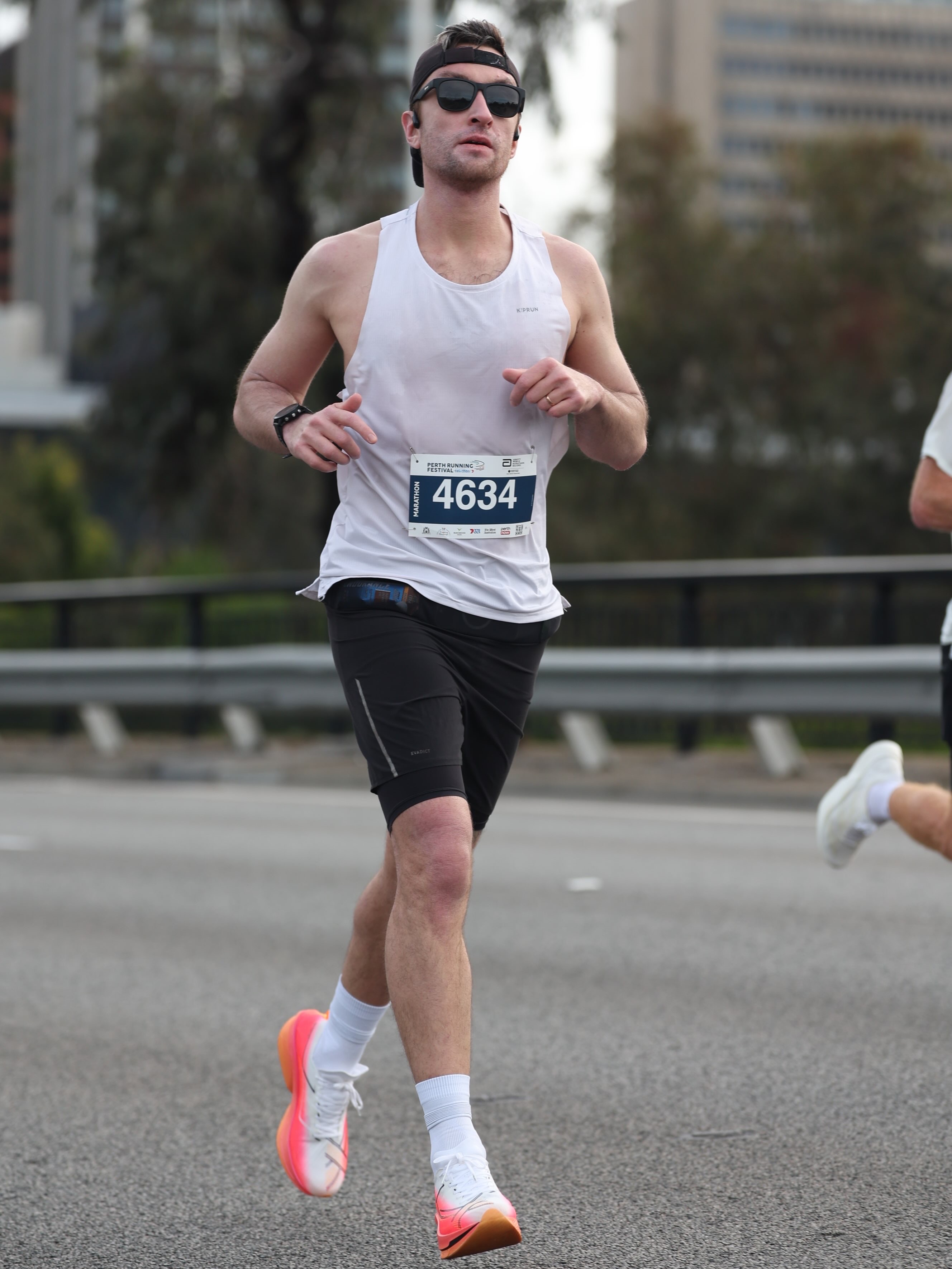
Around km 34, I saw my wife on the side of the course. Until then I hadn’t really thought about the finish. After that, I knew I could hold it to the end. I needed that: two kilometres later the sun came out, and holding pace got harder. The official 30–40km split was 46:55 (4:42/km), my slowest 10km of the day. I didn’t choose to ease off; the same effort just stopped producing the same speed.
The data tells a slightly different story from how it felt. Between 30km and 40km, HR averaged 142 bpm, lower than any earlier 10km segment, while pace slowed by about 8 seconds per kilometre compared with 20–30km. A cardiovascular limit would show HR climbing while pace held or dropped. Here HR fell with the pace. That matches exactly what I’d worried about before the race: the engine still had capacity, but my legs were setting the ceiling.
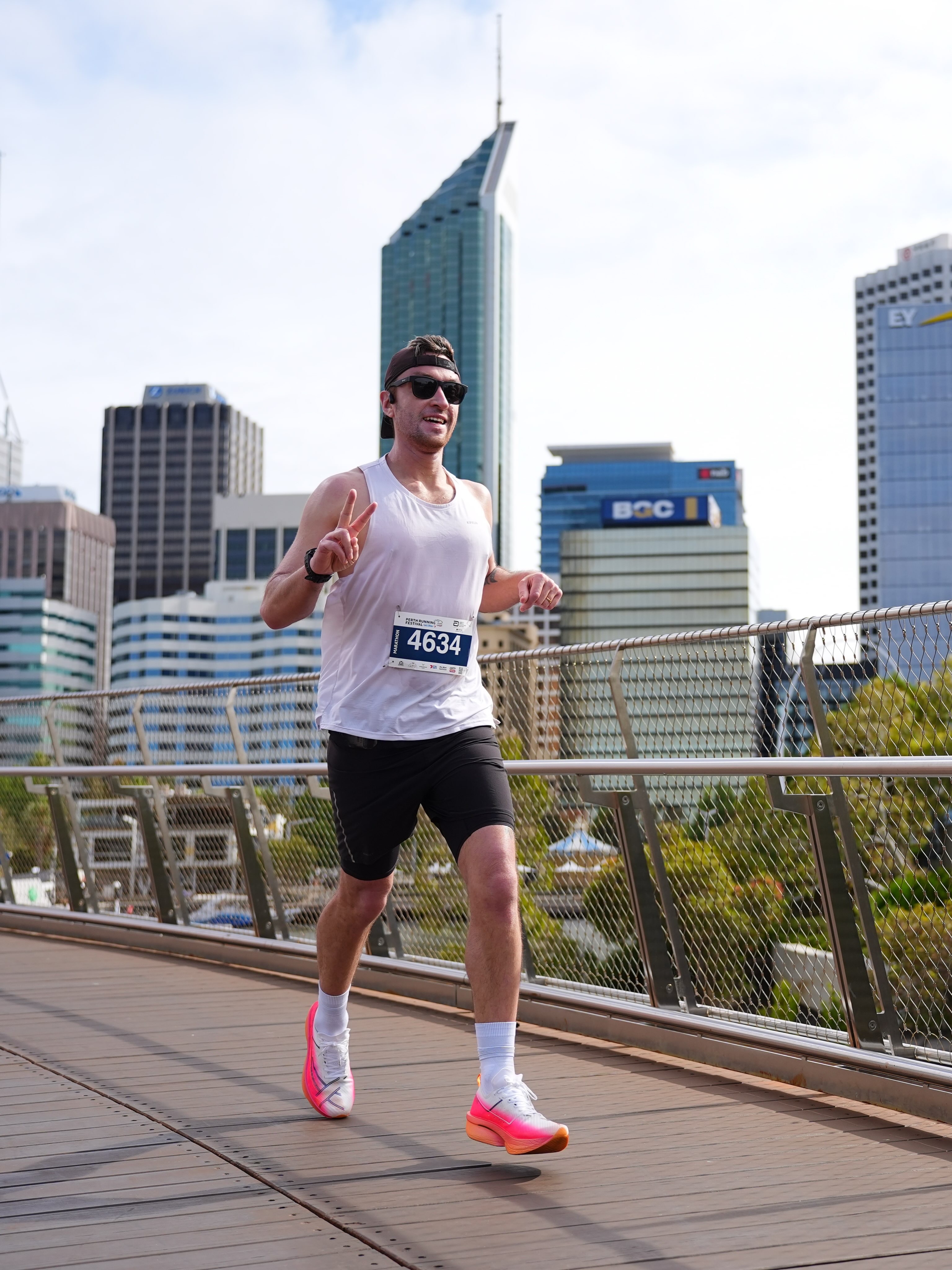
The fade was small and it did not last. The final 2.2km came back to 4:36/km. Across the whole race, the first 20km averaged 4:40/km and the remaining 22.2km averaged 4:37/km. I finished 247th, 201 places higher than at 10km, in an official 3:15:54.
This finish line felt one of the best to cross.
After the Finish #
No recovery shake, no data review yet: a classic burger and a long afternoon with friends and family. After six months of heat, haze and treadmill runs, that was the right way to close the trip.
What Worked #
Heat training in Kuala Lumpur, raced in 12–14°C. Six months of running in Malaysian heat and humidity made Perth’s morning feel easy on the body. I never felt hot, while runners around me were pouring water on their heads. Heart rate in the mid-140s at 4:38/km is a different cost from the same pace at home. More on how that adaptation works in running in heat and humidity.
The Vietnam ultra as aerobic base, not just fatigue. Long hours, steep climbing and low intensity built aerobic depth that showed up on a flat road. Three weeks with 40km and 50km of easy running was enough to absorb it. The 10–14 day recovery window was respected, and the race came after it.
Running on effort, not on the plan’s numbers. At each checkpoint I asked myself the same question: is this effort sustainable? Each time the answer was yes. The pace targets were off, but the checkpoints worked.
Hydration rhythm. Water or electrolyte at every other station kept things simple. No stomach issues, no cramping.
What Failed #
Unfamiliar gels. I raced on six Applied Nutrition gels instead of the Pure Sport Nutrition gels I normally use (more on my marathon fueling approach): one at the start line (the one that burst) and then about every 7km. The fueling itself worked; the packaging didn’t. Next time, I buy and test my race gels before the trip.
The plan’s pace targets. My plan was built on 4:45–4:50/km tempo runs in Kuala Lumpur heat, numbers carrying a heat penalty that doesn’t apply in 12–14°C. I finished 4:06 under plan. Being conservative three weeks after the ultra was right; the pace calibration wasn’t.
Sleep and the restroom stop. A 2:00am wake-up and a 35-second stop are partly outside my control, but not entirely. A pre-race evening routine for travel races and better timing of the last restroom visit before the corral are both worth improving.
Why Perth Works for a PB Attempt #
Perth is still a human-sized event. With around 3,800 marathoners this year, it is a fraction of a Major like Sydney, and that difference matters for performance.
- Space to run your own pace. After the initial rush, there was room to settle into a rhythm without weaving or braking. In a Major-sized field, holding an even 4:38/km from the first kilometre is hard to do, however good the legs are.
- A flat course. 170m of total gain over 42km, most of it on the bridges. No climbs late in the race that force a pacing decision.
- Cool conditions. A 6:00am start in October gave 12–14°C, with wind as the main variable.
After the race, I looked up the runners who finished around me on Strava. Most of them had also run a personal best. That is one race, not a study, but it is consistent with what the course offers: if the training is there, Perth does not get in the way.
For runners chasing a time rather than a medal collection, Perth is a strong option on the Australian calendar.
Data Breakdown #
| Segment | Time | Avg pace | Avg HR | Notes |
|---|---|---|---|---|
| 0–10km | 47:01 | 4:42/km | 144 bpm | Includes ~35s restroom stop at km 9 |
| 10–20km | 46:16 | 4:38/km | 146 bpm | |
| 20–30km | 45:36 | 4:34/km | 145 bpm | Fastest 10km |
| 30–40km | 46:55 | 4:42/km | 142 bpm | Sun out, legs limiting |
| 40–42.2km | 10:05 | 4:36/km | 142 bpm |
Times and paces are official chip splits (crossed the start mat 9 seconds after the gun). Heart rate is from the watch, which measured 42.58km on GPS, so segment HR is approximate.
| Checkpoint | Plan (3:20) | Official | Gap to plan | Placement |
|---|---|---|---|---|
| 10km | 47:25 | 47:01 | −0:24 | 448th |
| 20km | 1:34:50 | 1:33:17 | −1:33 | 391st |
| 30km | 2:22:12 | 2:18:53 | −3:19 | 359th |
| 40km | 3:09:40 | 3:05:48 | −3:52 | 262nd |
| Finish | 3:20:00 | 3:15:54 | −4:06 | 247th of 3,829 |
Heart rate: average 144 bpm, max 169 (km 10 climb after the restroom stop).
Cadence: 174 spm, unchanged from km 1 to km 42.
Fueling: 6 Applied Nutrition gels, one at the start line (burst in the pocket) and then about every 7km. Water or electrolyte at every other station.
Conditions: 12–14°C, some wind, sun from around km 36. Flat course, 170m total gain.
Shoes: Xtep 160X 6.0 Pro.
Full activity on Strava.
What Heat Training Means for Cool-Weather Races #
Perth changes how I should read training data from Kuala Lumpur. Tempo pace in tropical heat is not marathon pace in a cool race. The gap in this race was 6 to 11 seconds per kilometre. Future race plans for cool-weather marathons need a heat-adjusted reference, not the raw numbers from home.
It also changes how I see a mountain ultra before a marathon. I expected Vietnam to leave me flat. Instead, three weeks of easy volume after a long, low-intensity effort produced a PB, which suggests the mountain base carries over to the road better than I thought, as long as the recovery weeks stay genuinely easy.
The only sign of the ultra’s cost came between 30km and 40km, with pace and heart rate dropping together. That points to leg durability as the limit. For the next block:
- Add marathon-pace segments late in long runs to build leg durability at goal pace, not just aerobic volume
- Set race targets from heat-adjusted training data, or from a tune-up race in similar conditions
- Test race-day gels in training and travel with my own supply
- Build a pre-race sleep routine for travel races, accepting that early starts will still cut the night short
The bigger implication is the next target. I don’t think 3:15 is my ceiling: it’s where an even effort landed on legs only three weeks out from an ultra. The KL Half in November will be a checkpoint, but the real test is my next marathon in April 2027, after a proper marathon-specific block raced in cool conditions.
Key Takeaways #
- Effort-based checkpoints made this race. My pace targets were off by several seconds per kilometre, but asking “is this sustainable?” at 10km, halfway and 30km never steered me wrong.
- If you train in the heat and race in the cool, expect to beat your training paces. For me, the gap was 6 to 11 seconds per kilometre.
- Three easy weeks after a 70km mountain race was enough for a marathon PB. The cost only showed up in my legs between 30km and 40km.
- Don’t race on new gels. Mine worked, but one burst before I’d even started.
- Field size and course profile matter. Around 3,800 runners on a flat course left me room to run my own pace.
Looking back, Perth also says something about my previous marathons. The fitness was probably there before. What held me at 3:21 was as much the pace I believed I could hold as the pace I actually could. Perth was the first race where I followed the effort instead of the plan, and the time came with it.
Going into Perth, I was genuinely worried the ultra would cost me. Three weeks is a short recovery, and the plan was written to protect me from that. But sticking to the plan isn’t always the goal. Sometimes your body tells you clearly that there’s more available, and it’s worth testing. This time it went well. I know it doesn’t always: the same decision on a different day could have meant a long walk over the last 10km. That risk is part of why it was worth trying.
If you train in the heat and race somewhere cool, how do you set your pace targets?
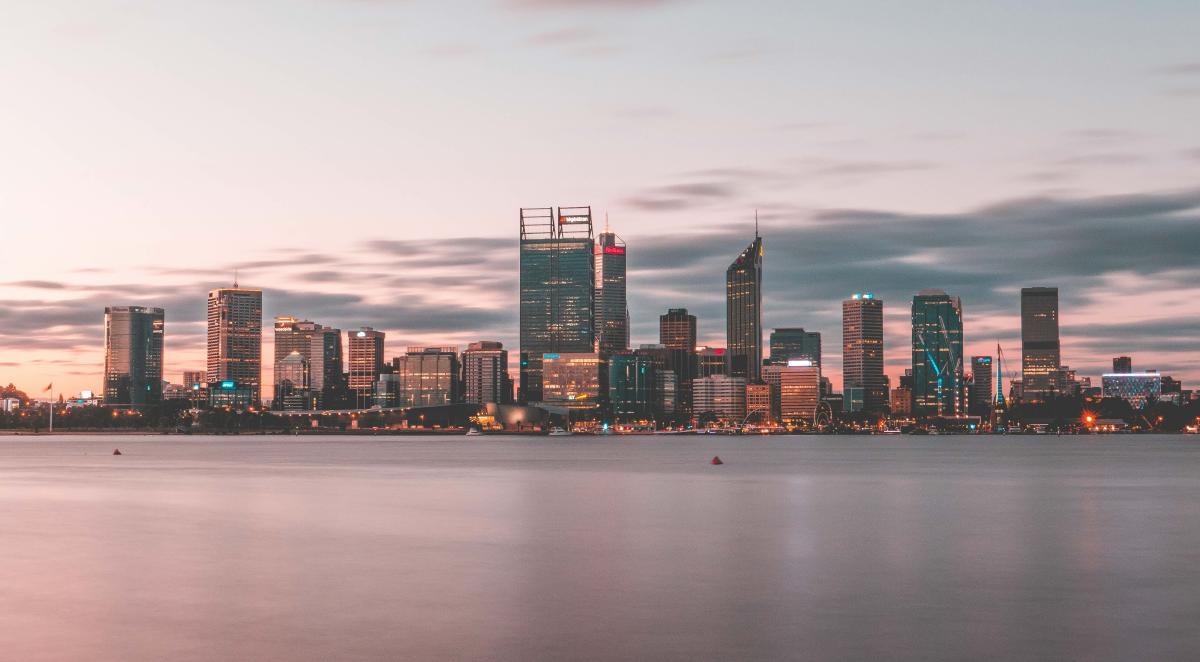
City photo by fadder 8